
News
Air, Electricity, and Insects: A New Recipe for Plant Nutrition?
March 27, 2026
By Pamela Andrade, University of California, Davis
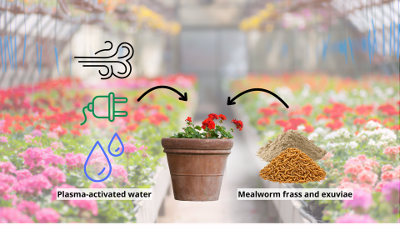
Greenhouse and nursery producers operate under constant pressure to deliver uniform, high-quality plants on predictable production schedules. Whether producing bedding plants, ornamentals, or vegetable transplants, growers depend on reliable inputs, especially growing media and nitrogen fertilizers, to maintain crop performance. However, in recent years, both of these foundational inputs have come under increasing scrutiny due to environmental concerns, rising costs, and supply chain vulnerability.
Nitrogen remains the primary driver of plant productivity across horticultural systems. Adequate nitrogen supports vegetative growth, canopy development, and overall plant quality. Yet the global nitrogen fertilizer system is both energy-intensive and vulnerable to disruption. Most synthetic nitrogen fertilizers are produced through the Haber–Bosch process, which converts atmospheric nitrogen into ammonia under high temperatures and pressure (Figure 1). This technology transformed agriculture in the 20th century, but it also requires substantial energy inputs. Today, ammonia production accounts for approximately 11% of total energy use in the global chemical industry and roughly 1–2% of total worldwide energy demand [1–3].
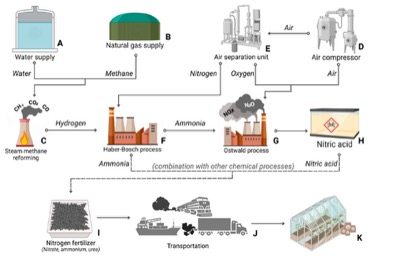
Figure 1. Flowchart of conventional fossil-based nitrogen fertilizer production. Reproduced from Andrade et al., 2025.
Global production of ammonia is also geographically concentrated. China produces approximately 26% of the world’s ammonia supply, and Russia more than 10%, while the United States still imports about 12% of its ammonia [4,5]. Recent disruptions, including the COVID-19 pandemic, geopolitical conflicts, and natural disasters, have highlighted the vulnerability of agricultural systems that rely heavily on centralized fertilizer production and global supply chains [5].
Even when fertilizer is available, a substantial portion is not captured by plants. Studies estimate that up to 50% of applied nitrogen fertilizer can be lost to the environment through leaching, volatilization, or runoff. In greenhouse and container-based production systems, these losses can be amplified because substrates have limited nutrient buffering capacity and irrigation is applied frequently [6]. As a result, nitrogen may move rapidly through the root zone before plants can fully utilize it.
These inefficiencies represent both an economic and environmental challenge. Fertilizer losses increase production costs while contributing to nutrient-rich leachate that is receiving increasing regulatory attention in many regions.
At the same time, the growing media used throughout the horticulture industry is also facing increasing scrutiny. For decades, peat has been the primary component of greenhouse substrates because of its desirable properties. Peat provides high water-holding capacity, good aeration, low bulk density, and favorable chemical stability, characteristics that support consistent plant growth across a wide range of crops [7].
Globally, an estimated 30 million cubic meters of peat are harvested each year, and approximately half of that volume is used in horticultural growing media. However, peatlands are also important ecological systems that function as long-term carbon reservoirs and unique habitats for biodiversity [7]. Because peat accumulates extremely slowly, often over thousands of years, its extraction is increasingly viewed as the use of a nonrenewable resource [7]. These concerns have prompted researchers, regulators, and industry groups to explore strategies that maintain substrate performance while reducing environmental impacts.
Together, these two challenges, nitrogen efficiency and substrate sustainability, are encouraging the horticulture industry to explore new approaches to nutrient management.
One emerging opportunity comes from an unexpected source: the rapidly expanding insect production industry. Insects such as mealworms are increasingly mass-reared for use in animal feed and alternative protein production because they efficiently convert low-value organic materials into high-protein biomass. As this industry grows, it also generates significant quantities of by-products [8].
Two of the most abundant by-products are frass, the manure produced by insects, and exuviae, the molted exoskeletons shed during insect growth (Figure 2) [8,9]. In commercial mealworm production systems, frass can accumulate in quantities up to 40 times the biomass of the insects themselves. This material typically contains 3–5% nitrogen and approximately 70% organic matter, suggesting strong potential as a nutrient source in horticultural substrates [10].
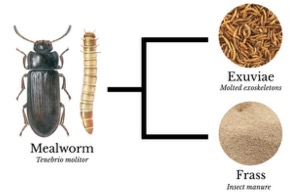
Figure 2. Illustration of mealworm farming by-products
Exuviae represent another underutilized resource. These shed exoskeletons contain chitin, the second most abundant natural polymer on Earth after cellulose. Chitin and its derivatives have been associated with enhanced microbial activity in soils, gradual nutrient release, and stimulation of plant growth. In several systems, chitin-based materials have been linked to increased plant biomass, improved nutrient uptake, and enhanced plant resilience through interactions with beneficial microorganisms in the root zone [11,12].
Despite this potential, insect-derived materials remain largely unexplored in greenhouse substrates used for floriculture and nursery production.
At the same time, advances in plasma technology have introduced another emerging tool for nutrient management known as plasma-activated water (PAW). PAW is generated when electrical energy is applied to a gas under atmospheric conditions, creating a partially ionized plasma that produces short-lived reactive oxygen and nitrogen species (Figure 3). When these compounds dissolve in water, they can form plant-available nitrogen compounds such as nitrate and nitrite.
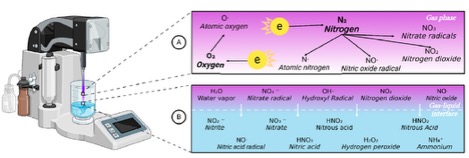
Figure 3. Formation of PAW components through jet plasma. (A) Electron–molecule collisions in the plasma beam, ambient air serves as the input gas. (B) Gas–liquid interface, where the plasma interacts with water, generating reactive oxygen and nitrogen species. Reproduced from Andrade et al., 2025.
One important advantage of PAW is that it can be produced locally using electricity, potentially including renewable energy sources [13]. This means that nitrogen-containing irrigation water could be generated directly within controlled-environment production systems rather than relying entirely on externally manufactured fertilizers [1]. Early studies suggest that the reactive compounds present in PAW may also influence plant physiological processes related to growth, nutrient uptake, and stress response (Figure 4) [13–15].
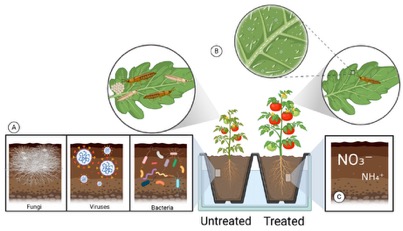
Figure 4. Comparison of the benefits of PAW application in crop production. (A) Presence of pathogens in untreated plants. (B) Pest infestation in untreated plants, with a reduction in pest populations in PAW-treated plants, attributed to increased trichome density. (C) PAW as a fertilizer enhancer, promoting plant growth and overall health. Reproduced from Andrade et al., 2025.
In 2025, our research team published a comprehensive review examining the role of PAW in controlled-environment agriculture. The article summarizes the rapidly expanding body of research exploring how this technology may support plant growth and nutrient management in greenhouse systems [1]. Since its publication, the review has received more than 6,000 views and 8 citations, reflecting growing scientific interest in this emerging approach. For readers interested in a deeper overview of the science and potential applications of PAW, the review offers a detailed and accessible starting point. Additional information about the different types of research we conduct can also be found on our website (https://chrnansen.wixsite.com/nansen2/cold-plasma-1).
Our group has also already delivered and published additional information regarding PAW’s role in floricultural production and how fertilizer is in the air we breathe. Which can be found here:
- Nansen C. 2025. Plasma-activated water (PAW) for floriculture production. Invited virtual seminar at the 2025 Grow Pro Series (https://endowment.org/growpro/). American Floral Endowment. July 22nd, 2025. YouYube video: https://youtu.be/EC34O1ASm3Q
- Nansen C, 2025. Nitrogen fertilizer needed to grow crops is in the air we breathe. American Floral Endowment Newsletter – Dec 2025 (https://endowment.org/news/the-nitrogen-fertilizer-needed-to-grow-crops-is-in-the-air-we-breathe)
Industry interest appears to be growing as well. In a recent national survey of 82 commercial greenhouse and nursery producers, growers were asked about their awareness and interest in PAW. The results were encouraging, with 78% of respondents reporting they were interested in learning more about PAW, and 55% indicated they would be willing to trial the technology in their own production systems [16]. These responses suggest that growers are actively seeking innovative tools that could improve nutrient management and sustainability in horticultural production.
At the same time, we have been exploring the potential of insect-derived soil amendments, which are increasingly available as by-products of the rapidly expanding insect farming industry. In a series of greenhouse trials, we evaluated several chitin-based materials, including chitin, chitosan, and mealworm exuviae (Figure 5).
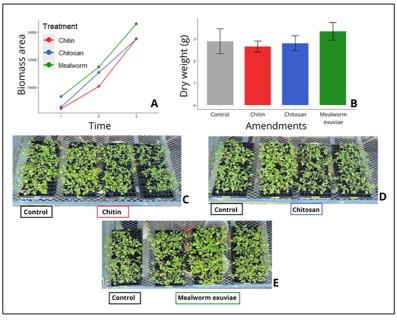
Figure 5. Effects of chitin-derived amendments on tomato transplant performance. (A) Biomass area over time for seedlings. (B) Final shoot dry weight. (C–E) Representative greenhouse tray images comparing untreated control seedlings with (C) chitin, (D) chitosan, and (E) mealworm exuviae amendment.
Across the experiment, mealworm exuviae consistently produced stronger plant growth compared with the other materials tested, particularly across biomass-related measurements. These trials also allowed our team to refine practical aspects of the research process, including amendment incorporation methods, optical sensing workflows, and greenhouse experimental protocols.
In the future, we plan to continue using optical sensing technologies such as red–green–blue (RGB) and hyperspectral imaging to monitor plant growth and health without damaging the plants. These tools allow us to detect subtle changes in plant color and structure that are often linked to nutrient status, photosynthesis, and overall performance. With RGB imaging, we can isolate plant tissue from the background using green-based thresholding, converting the image into a dichotomous outcome that separates plant pixels from non-plant pixels (Figure 6). By using this binary mask, we can translate these pixels into physical areas using a calibrated scale, and we can estimate plant biomass quickly and objectively. While dense canopies or overlapping leaves can sometimes hide plant tissue and lead to slight underestimation, this approach remains an automated, non-destructive, and highly repeatable way to track plant growth and support data-driven crop management.
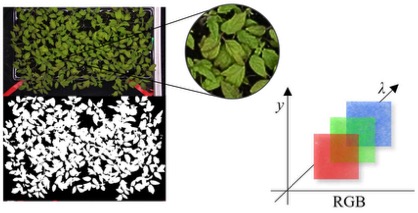
Figure 6. Example of RGB image processing used to quantify plant growth.
These emerging tools point toward a future where greenhouse production systems become more efficient, resilient, and resource-conscious. By combining locally generated nitrogen sources such as PAW with nutrient-rich insect by-products, growers may be able to reduce reliance on conventional fertilizers while maintaining strong plant performance. At the same time, new sensing technologies allow researchers and producers to monitor plant responses with unprecedented precision. These advances highlight how innovation across multiple fields, from insect farming to plasma physics and digital agriculture, can converge to address real challenges in horticulture. As research continues, our applied research into PAW, and our website are regularly updated as we develop new outputs. We are grateful to receive funding grants from USDA/Specialty Crop Multi-State Program, NIFA/ORG, USDA/ARS Floriculture, Nursery Research Initiative, Western Sustainable Agricultural Research & Extension (WSARE), and American Floral Endowment.
References:
1. Andrade, P.E.; Savi, P.J.; Almeida, F.S.; Carciofi, B.A.; Pace, A.; Zou, Y.; Eylands, N.; Annor, G.; Mattson, N.; Nansen, C. Plasma-Activated Water as a Sustainable Nitrogen Source: Supporting the UN Sustainable Development Goals (SDGs) in Controlled Environment Agriculture. Crops 2025, 5, 35, doi:10.3390/crops5030035.
2. López Martínez, P. Techno-Economic Analysis of a Solar Ammonia and Fertilizer Production. Master Thesis, German Aerospace Center, Institute of Future Fuels, Linder Höhe, 51147 Cologne Germany DTU, Process and Systems Engineering Centre, Søltofts Plads, Building 224, 2800 Kgs.Lyngby, Denmark, 2022.
3. Chen, J.G.; Crooks, R.M.; Seefeldt, L.C.; Bren, K.L.; Bullock, R.M.; Darensbourg, M.Y.; Holland, P.L.; Hoffman, B.; Janik, M.J.; Jones, A.K.; et al. Beyond Fossil Fuel–Driven Nitrogen Transformations. Science 2018, 360, eaar6611, doi:10.1126/science.aar6611.
4. Ibendahl, G. The Russia-Ukraine Conflict and the Effect on Fertilizer; Department of Agricultural Economics, Kansas State University: Manhattan, KS, USA, 2022; pp. 1–12;.
5. Ben Hassen, T.; El Bilali, H. Impacts of the Russia-Ukraine War on Global Food Security: Towards More Sustainable and Resilient Food Systems? Foods 2022, 11, 2301, doi:10.3390/foods11152301.
6. Wang, X.; Jia, J.; Lu, C.; Chen, H.; Chen, X.; Peng, X.; Chi, G.; Song, Q.; Hu, Y.; Ma, J. Optimizing Nitrogen for Sustainable Yield and Efficiency: Insights from Shouguang Facility-Grown Tomatoes. Agronomy 2025, 15, 420, doi:10.3390/agronomy15020420.
7. Pascual, J.A.; Ceglie, F.; Tuzel, Y.; Koller, M.; Koren, A.; Hitchings, R.; Tittarelli, F. Organic Substrate for Transplant Production in Organic Nurseries. A Review. Agron. Sustain. Dev. 2018, 38, 35, doi:10.1007/s13593-018-0508-4.
8. Poveda, J. Insect Frass in the Development of Sustainable Agriculture. A Review. Agron. Sustain. Dev. 2021, 41, 5, doi:10.1007/s13593-020-00656-x.
9. Hénault-Ethier, L.; Quinche, M.; Reid, B.; Hotte, N.; Fortin, A.; Normandin, É.; De La Rochelle Renaud, G.; Rasooli Zadeh, A.; Deschamps, M.-H.; Vandenberg, G. Opportunities and Challenges in Upcycling Agri-Food Byproducts to Generate Insect Manure (Frass): A Literature Review. Waste Manag. 2024, 176, 169–191, doi:10.1016/j.wasman.2023.12.033.
10. Houben, D.; Daoulas, G.; Faucon, M.-P.; Dulaurent, A.-M. Potential Use of Mealworm Frass as a Fertilizer: Impact on Crop Growth and Soil Properties. Sci. Rep. 2020, 10, 4659, doi:10.1038/s41598-020-61765-x.
11. Wantulla, M.; Van Zadelhoff, K.; Van Loon, J.J.A.; Dicke, M. The Potential of Soil Amendment with Insect Exuviae and Frass to Control the Cabbage Root Fly. J. Appl. Entomol. 2023, 147, 181–191, doi:10.1111/jen.13097.
12. Nurfikari, A.; Leite, M.F.; Kuramae, E.; De Boer, W. Microbial Community Dynamics During Decomposition of Insect Exuviae and Frass in Soil. SSRN Electron. J. 2023, doi:10.2139/ssrn.4422505.
13. Guo, D.; Liu, H.; Zhou, L.; Xie, J.; He, C. Plasma‐activated Water Production and Its Application in Agriculture. J. Sci. Food Agric. 2021, 101, 4891–4899, doi:10.1002/jsfa.11258.
14. Song, J.-S.; Kim, S.B.; Ryu, S.; Oh, J.; Kim, D.-S. Emerging Plasma Technology That Alleviates Crop Stress During the Early Growth Stages of Plants: A Review. Front. Plant Sci. 2020, 11, 988, doi:10.3389/fpls.2020.00988.
15. Waskow, A.; Howling, A.; Furno, I. Mechanisms of Plasma-Seed Treatments as a Potential Seed Processing Technology. Front. Phys. 2021, 9, 617345, doi:10.3389/fphy.2021.617345.
16. Eylands, N.J.; Yue, C.; Wang, Y.; Kaczmar, N.S.; Andrade, P.E.; Savi, P.J.; Nansen, C.; Annor, G.A.; Carciofi, B.A.M.; Mattson, N.S. Greenhouse and Nursery Producers Have Optimistic Outlook Toward Adoption of Plasma-Activated Water in Young Plant Production. HortTechnology 2025, 35, 710–718, doi:10.21273/HORTTECH05689-25.


